

The decision to move from a paper-based permit to work system to a digital one is not always straightforward. Paper systems have been used successfully in high-hazard industries for decades, and digital systems are not automatically better simply because they are newer. The right choice depends on your organisation's size, complexity, risk profile and operational context.
The PTW system exists to ensure that hazardous work is planned, authorised, controlled and closed out in a disciplined and auditable way. Any system, paper or digital, needs to deliver on those fundamentals.
The Case for Paper
Paper-based permit to work systems have a number of genuine strengths that should not be dismissed.
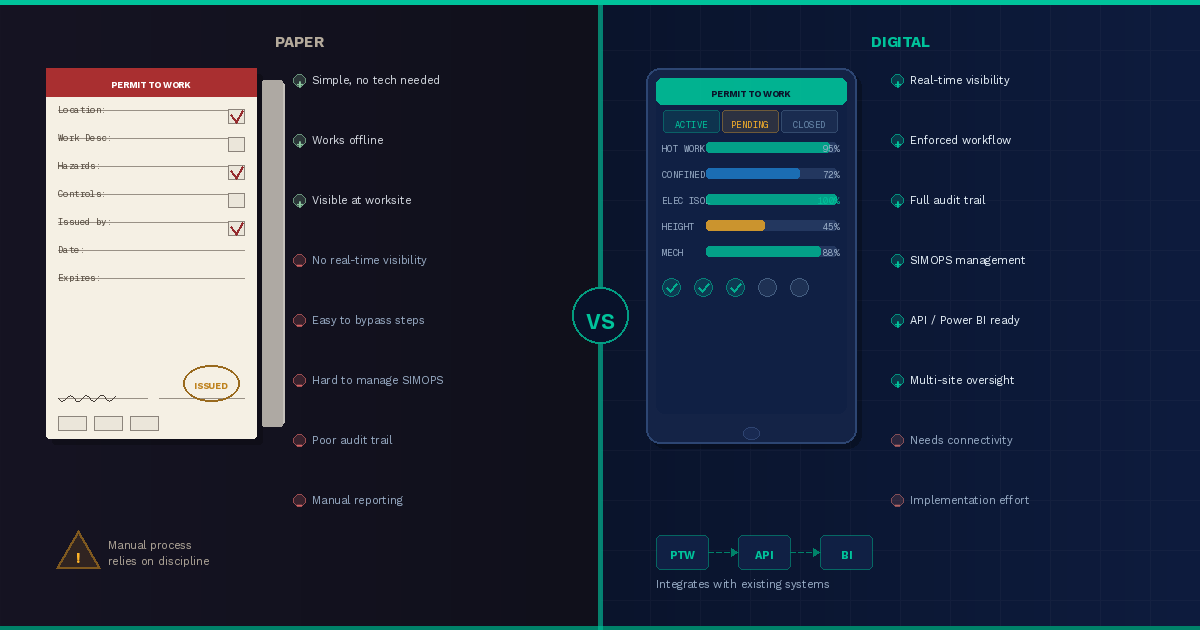
They are simple to understand and require no technical infrastructure. Anyone who can read and write can use a paper permit without training on a software platform. In remote locations, on vessels, or in areas with no reliable connectivity, paper remains a practical and resilient option. There are no system outages, no login failures, and no dependency on a server being available.
Paper permits are also physically present at the point of work. A laminated permit clipped to a valve or displayed at the entry to a confined space provides a visible, tangible reminder of the authorisation and its conditions. This physical presence has genuine value in some operational settings.
For smaller organisations with a modest volume of permits, a well-run paper system can be entirely adequate. If the site issues ten permits a week, the administrative overhead of managing them manually is not significant, and the cost of a digital system may not be justified.
The Weaknesses of Paper
The strengths of paper begin to erode as the scale and complexity of operations increase, and in most modern operational environments the weaknesses are significant.
Visibility is the most obvious problem. With a paper system, there is no easy way to know at any given moment how many permits are active, where work is taking place, or whether any activities are conflicting with each other. A site supervisor may have a physical board showing current permits, but it requires manual maintenance and is only as accurate as the last update. In a dynamic environment, that lag creates risk.
Simultaneous operations, where multiple activities take place at the same time and may interact with each other, are particularly difficult to manage on paper. Identifying conflicts between concurrent permits requires someone to physically review all active paperwork and hold the full picture in their head. This is manageable on a small site with low permit volumes but becomes increasingly unreliable as complexity grows.
Paper permits are also vulnerable to loss, damage and illegibility. A permit completed in the field on a wet or windy day may be difficult to read. A permit that goes missing creates an audit gap that cannot be reconstructed. Signatures can be forged or applied without proper review. There is no system-enforced workflow to ensure that every step has been completed before the next one begins.
Reporting and analysis are difficult with paper systems. Extracting trends, identifying recurring issues, or demonstrating compliance to a regulator requires someone to manually collate and interpret records. This is time-consuming and prone to error, and it makes continuous improvement harder to sustain.
The Case for Digital
A well-implemented digital permit to work system addresses most of the weaknesses of paper while introducing capabilities that paper cannot replicate.
Visibility is improved
At any point, a supervisor, safety manager or site controller can see all active permits, their status, who holds them and where work is taking place. This real-time overview makes simultaneous operations management genuinely practical. Conflicts between activities can be identified and resolved before work begins rather than discovered after something goes wrong.
Workflow enforcement
This is one of the most significant advantages of a digital system. The software can be configured to prevent a permit from being issued until all required fields are complete, all approvals have been obtained, and all preconditions have been confirmed. Steps cannot be skipped under time pressure. The system provides a structural discipline that paper relies on individuals to self-impose.
Audit trails
Are comprehensive and automatic. Every action taken within the system, from creation through to close-out, is recorded with a timestamp and the identity of the person who performed it. This level of traceability supports incident investigation, regulatory inspection and internal assurance without anyone needing to compile records manually.
Integration with other safety management processes
A permit can be linked to the relevant risk assessment, the isolation schedule, the contractor management record and the action tracking system. When work generates a follow-up action, it can be captured and tracked within the same environment rather than managed through a separate process. This integration reduces the risk of things falling through the gaps between systems.
Reporting becomes straightforward. Permit volumes, completion rates, overdue permits, permit types by area or activity, and trends over time can all be extracted and presented without manual effort. This data supports both day-to-day management and longer-term safety performance analysis.
For organisations with multiple sites, digital systems provide a consistent approach across all locations. Permit templates, approval hierarchies and workflow configurations can be standardised, and performance can be compared across sites in a meaningful way.
The Weaknesses of Digital
Digital systems do have their own challenges, and these need to be considered honestly.
Implementation
Requires investment, both in the system itself and in the time needed to configure it, train users and embed new ways of working. A poorly configured digital system, with workflows that do not reflect operational reality or templates that are too generic, can create the same problems as a poor paper system but with greater complexity behind them.
Connectivity dependency
Is a real consideration. If the system is cloud-based and connectivity is lost, work cannot proceed unless there are robust offline or backup arrangements in place. The UK's HSG250 guidance specifically notes that electronic PTW systems should have backup arrangements for system failure. Any digital implementation should address this directly.
User adoption
Can be a barrier, particularly in organisations where paper systems are deeply embedded and where the workforce is not accustomed to using digital tools in the field. Resistance to change can undermine even a technically strong system if it is not managed carefully. Getting buy-in from the people who use the system every day is as important as the technical implementation.
There is also a risk of over-engineering. A digital system that introduces complexity, multiple approval layers or lengthy workflows for routine low-risk tasks can slow work down to the point where people begin to look for ways around it. The system should make the right process easier, and not make it feel like an obstacle.
How to Choose
The choice between paper and digital should be driven by an honest assessment of where your current system is failing and what you need it to do.
If your organisation issues a high volume of permits, manages simultaneous operations, operates across multiple sites, employs contractors regularly, or needs to demonstrate compliance to regulators, the case for a digital system is strong. The visibility, workflow enforcement, audit trail and integration capabilities of a well-implemented digital system deliver genuine safety and governance value that paper cannot match at scale.
If your organisation is small, issues permits infrequently, operates in a single location with reliable manual oversight, or works in environments where connectivity is genuinely unavailable, a paper system may remain appropriate, provided it is well-designed and consistently applied.
For many organisations the answer is not binary. A phased approach, starting with digital permits for the highest-risk or highest-volume activities and maintaining paper as a backup, can reduce implementation risk while beginning to deliver the benefits of digital management.
Whatever the approach, the fundamental test is the same: does the system ensure that hazardous work is planned, authorised, controlled and closed out consistently and with a reliable audit trail? If the answer is yes, the system is doing its job. If there are gaps in any of those areas, it is worth asking whether a different approach would serve your organisation better.