

Introduction
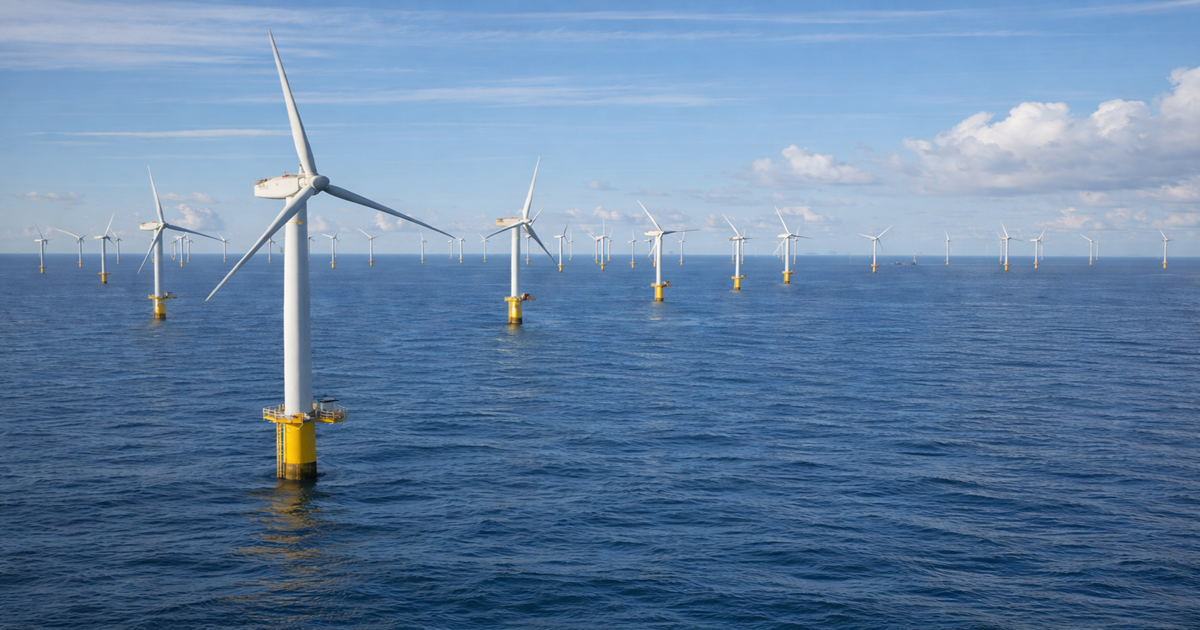
Offshore wind has grown from a niche technology into one of the most significant sectors in the global energy industry. Turbine arrays now extend tens of kilometres offshore, in water depths and sea states that would have been considered impractical a decade ago. Offshore substations collect and export power from hundreds of turbines. Crew transfer vessels operate year-round in demanding conditions. The scale, complexity and pace of growth are all increasing simultaneously.
With that growth comes a training challenge that the sector is only beginning to address seriously. Many of the personnel now entering offshore wind operations come from industries with well-established training frameworks, oil and gas in particular. Others are new to offshore environments entirely. The specific risks of offshore wind, remote and largely unmanned assets, marine access in difficult conditions, electrical systems operating at very high voltages, and emergency response without the immediate support structures available on a crewed platform, require training that is tailored to the environment rather than adapted from somewhere else.
Simulation-based training has an increasingly important role to play in meeting that challenge. This article sets out the key risks that offshore wind operations training needs to address, explains why simulation is well suited to the sector, and describes what a realistic training programme looks like in practice.
What Makes Offshore Wind Different
Offshore wind operations present a combination of risks that does not map neatly onto other energy sectors. Understanding those differences is the starting point for building training that is genuinely fit for purpose.
Remote, Largely Unmanned Assets
Most offshore wind turbines are unmanned during normal operations. Technicians access them by vessel or helicopter, carry out work, and return to shore or to a nearby service vessel. This means that when something goes wrong, the response must be managed with limited personnel on site, over significant distances, and often in conditions that affect access.
The absence of a permanent crew changes the emergency response picture significantly. There is no standing emergency response team. Communication with shore-based incident management is critical. The individuals on site at the time of an incident may be a small team of technicians with limited support until external resources can reach them.
Marine Access and Transfer Risk
Getting personnel safely onto and off turbines and substations is one of the most consistently hazardous activities in offshore wind operations. Crew transfer vessels operate in sea states that push the limits of safe working. Boat landings on turbine platforms and walk-to-work gangways on larger vessels each carry distinct risks. Man overboard is a realistic scenario in this environment, not a theoretical one.
Training for marine access risk requires an understanding of vessel behaviour, sea state assessment, transfer procedures, and the emergency response to personnel in the water. These are skills that benefit significantly from simulation, because the scenarios involved are high-consequence and cannot be safely rehearsed in live conditions.
High-Voltage Electrical Systems
Offshore wind farms involve high-voltage electrical systems at every level, from individual turbine generators through array cables to offshore substations and export cables connecting to the onshore grid. Personnel working in or around these systems require specialist training, and the consequences of electrical incidents at this scale are severe.
Switching and isolation operations on offshore electrical systems carry significant risk. Offshore substations, in particular, present challenges around access, isolation, and emergency response that differ substantially from onshore high-voltage environments.
Offshore Substations
Offshore substations are a growing feature of larger wind farm developments. They are typically manned only during maintenance visits, often accommodate small teams working in confined and hazardous conditions, and are located well offshore with limited immediate emergency support.
Fire, electrical fault, or medical emergency on an offshore substation presents significant logistical and response challenges. Training for these scenarios requires familiarity with the layout and systems of the substation, the communication and escalation procedures, and the coordination between on-site personnel, the wind farm control room, and external responders.
Why Traditional Training Falls Short
The offshore wind sector has largely relied on a combination of generic offshore safety training, adapted oil and gas competency frameworks, and on-the-job familiarisation. Each of these has limitations when applied to the specific risks of offshore wind.
Generic offshore safety training provides essential foundations, but it does not address the specific scenarios, communication structures, or decision-making demands of wind farm operations. An incident at a remote unmanned turbine, managed by a small team with limited onsite resources and coordinated from shore, looks very different from the offshore platform emergency response scenarios that most training curricula are built around.
Adapted oil and gas frameworks are useful where the risks overlap, but the differences are significant enough to matter. Permanent crewed platforms have established emergency response teams, command structures, and onboard resources that unmanned wind assets do not. Training built for one environment does not automatically transfer to the other.
On-the-job familiarisation is valuable but insufficient for high-consequence events. The scenarios that matter most in terms of safety, major electrical faults, vessel collisions with turbines, man overboard in challenging conditions, personnel incidents on remote substations, are precisely those that cannot be rehearsed in normal operations.
What Simulation Provides
Simulation addresses the gap between existing training provision and the specific demands of offshore wind operations in several important ways.
Realistic Incident Scenarios
A well-designed offshore wind simulator can replicate the operational environment of a wind farm, including turbine array layout, vessel positions, control room systems, and communication channels. Instructors can create scenarios that reflect the actual risks the sector faces: unidentified vessels approaching the array, turbine technical failures requiring technician response, CTV incidents, man overboard, medical emergencies at remote locations, and vessel collision with a turbine structure.
These scenarios can be run repeatedly, at any level of complexity, and with any combination of environmental conditions. The training value comes from the repetition and realism that live exercises cannot provide.
Information Management Under Pressure
One of the most consistent findings from incident response training in the offshore wind sector is that managing large volumes of information under pressure is genuinely difficult. During a significant incident, the shore-based incident management team must track vessel positions, personnel on board, communications with multiple external agencies including the coastguard, status updates from site, and media interest, all simultaneously.
Simulation replicates this information environment. Dynamic whiteboards, vessel tracking displays, simulated communications across radio, phone and email, and configurable news feeds all contribute to a training environment that reflects what a real incident actually feels like to manage. This is qualitatively different from a tabletop exercise, and the difference matters for the quality of the training outcome.
External Agency Coordination
Offshore wind incidents frequently involve coordination with external agencies. A vessel collision with a turbine structure involves the coastguard, potentially other vessels in the area, and the wind farm operator's own incident management team. A serious medical emergency may require helicopter evacuation coordinated across multiple organisations.
Training for this coordination is difficult to do well without simulation. The communication demands, the need to maintain accurate information across multiple parties, and the decision-making involved in managing an escalating incident with external stakeholders cannot be replicated in a classroom.
The Pause Function
One feature of simulation that is particularly valuable for training providers new to the offshore wind sector is the ability to pause a scenario mid-exercise. When a team is struggling, or when a key decision point has been reached, the instructor can pause the scenario, facilitate a discussion, and then continue. This allows learning to happen in the moment rather than only in a post-exercise debrief, and it makes simulation accessible to trainees who are earlier in their development.
Simulation in Practice: Offshore Wind Training at East Coast College
East Coast College, which operates from campuses in Lowestoft and Great Yarmouth, close to the heart of the UK offshore wind industry, has developed an offshore wind incident response training programme in conjunction with Pisys. The college already used the Pisys simulator for MEMIR training with oil and gas customers and recognised the opportunity to adapt it for the wind sector.
The simulator is used to model the behaviour of an offshore wind farm and train incident response teams to manage a range of scenarios specific to the sector. Live trials with offshore wind industry operators have produced positive results, and the programme is now part of the college's offering to the wind energy sector.
The experience at East Coast College illustrates a broader point: training providers with existing simulation capability are well placed to extend into the offshore wind market, and the adaptation from oil and gas scenarios to wind farm scenarios is more straightforward than it might appear. The underlying skills being developed, command and control, communication under pressure, information management, external agency coordination, are the same. The scenarios and operating environment are different, and that is what needs to be modelled.
Building a Training Programme for Offshore Wind
For operators and training providers developing offshore wind operations training, simulation should sit at the centre of the emergency response and incident management component. The following elements are worth considering when designing the programme.
Scenario library. The scenarios used in training should reflect the actual risk profile of the assets involved. A nearshore wind farm with regular vessel access and good weather windows presents different challenges to a remote deepwater array with limited access periods. Scenario design should start from a realistic assessment of what is most likely to go wrong and what the consequences would be.
Communication and coordination. Training should specifically address the communication demands of offshore wind incident management, including coordination with the coastguard, vessel masters, helicopter operators, media, and senior management. These are skills that require practice and do not develop through instruction alone.
Information management. The volume and pace of information during a real incident is one of the most consistently underestimated challenges in emergency response training. Simulation should replicate this, including the dynamic vessel tracking, personnel accounting, and multi-channel communications that characterise a real offshore wind incident.
Onshore incident management. Much of the decision-making during an offshore wind incident happens onshore. Training the shore-based incident management team, not just the offshore personnel, is essential and is an area where simulation provides particular value.
Regular refresher training. The skills developed through simulation degrade without practice. A programme that includes regular refresher exercises, supported by the flexibility of cloud-based access, is more effective than infrequent extended courses.
Conclusion
Offshore wind is a sector with a strong safety culture and a genuine commitment to getting training right. The pace of growth, the influx of new personnel, and the specific risks of the operating environment all create an urgent need for training provision that goes beyond generic offshore safety courses and adapted oil and gas frameworks.
Simulation-based training provides a practical and effective way to meet that need. It allows teams to rehearse the scenarios that matter most, develop the communication and information management skills that real incidents demand, and build the familiarity and confidence that only repeated practice can produce.
As the sector continues to grow, the organisations that invest in realistic, scenario-based training now will be better prepared for the incidents that will inevitably occur.
To find out more about how the Pisys simulator supports offshore wind incident response training, visit our operations training simulator page or read the East Coast College case study.
